Historic UN Vote Backs Ghana’s Call on Slave Trade Recognition
UN Resolution
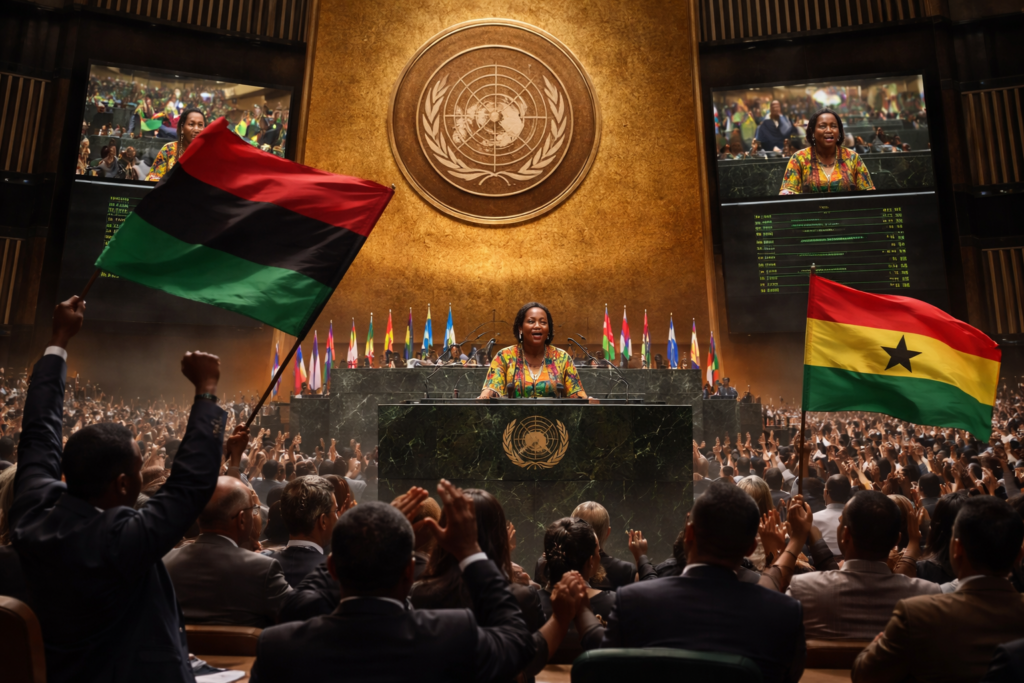
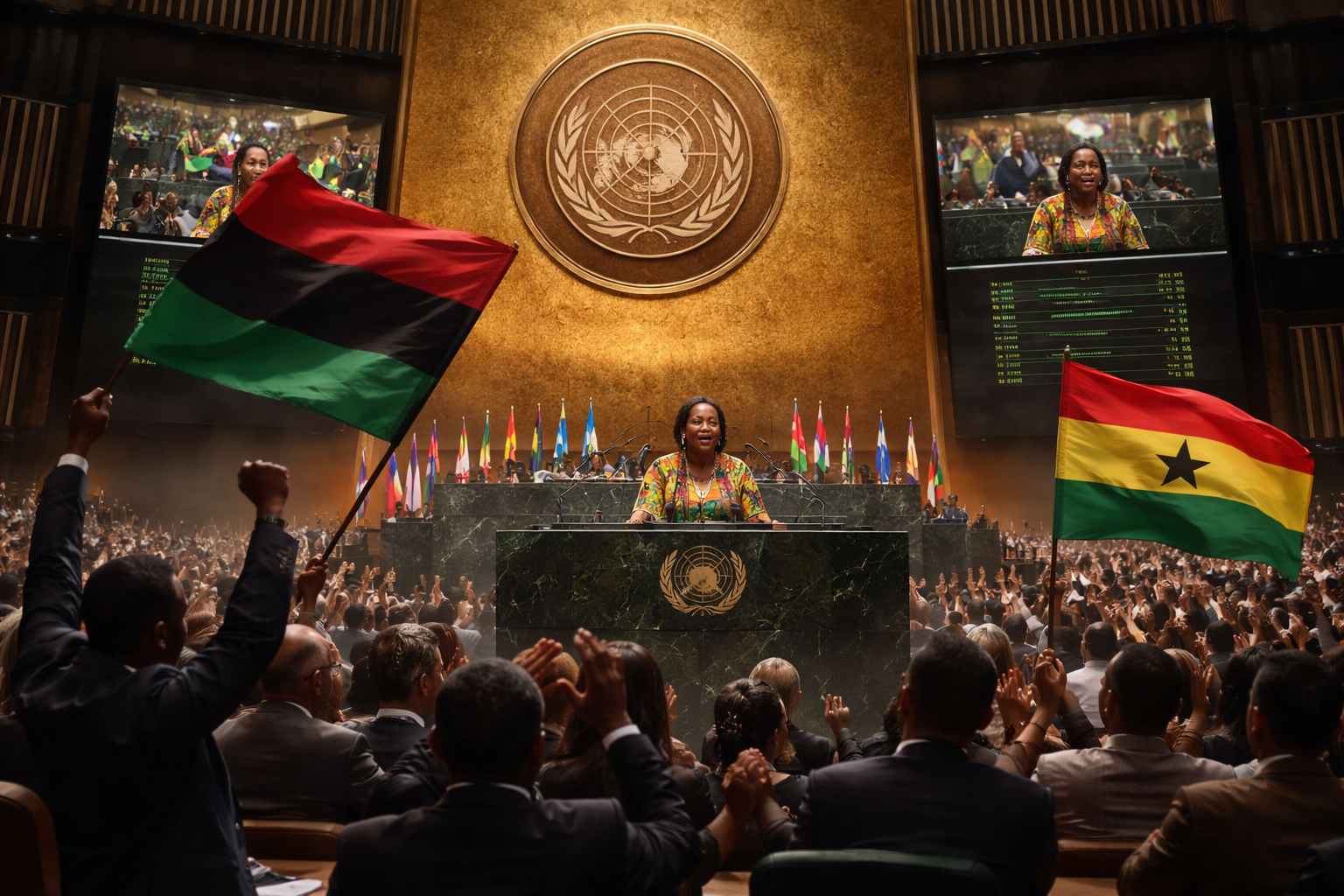
In a landmark moment for global historical justice, the United Nations has formally adopted a resolution—led by Ghana—recognizing the transatlantic slave trade as the “gravest crime against humanity.” The resolution also calls for renewed global dialogue on reparatory justice for affected populations.
The vote, held on March 25, 2026, saw overwhelming support, with 123 countries voting in favor, while the United States, Israel, and Argentina voted against, and 52 countries abstained, including the United Kingdom and member states of the European Union.
Although not legally binding, the resolution carries major political and moral weight, signaling a shift in how the international community acknowledges the scale, duration, and enduring consequences of the transatlantic slave trade.
Why This Matters
The transatlantic slave trade forcibly displaced over 12 million Africans and laid the foundation for global systems of racial inequality that persist today.
By formally recognizing it as the gravest crime against humanity, the UN has elevated long-standing demands—particularly from African and Caribbean nations—for acknowledgment, accountability, and repair.
The resolution also encourages actions such as:
- Formal apologies
- Return of cultural artifacts
- Economic and social reparations
- Educational reform and historical recognition
ADG Perspective: Beyond Symbolism
For the African Diaspora Group (ADG), this moment is both historic and incomplete.
Should African countries receive reparations?
Yes—but with intention and structure.
Reparations must go beyond state-level compensation. While African nations were directly impacted through depopulation, destabilization, and underdevelopment, the diaspora communities—descendants of enslaved Africans—remain among the most affected globally.
ADG maintains that reparations should be:
- Dual-tracked: Supporting both African nations and diaspora populations
- Community-centered: Targeting education, land access, business funding, and cultural restoration
- Transparent and accountable: With clear mechanisms for distribution
How will reparations reach affected people?
This is the critical question.
Without deliberate frameworks, there is a real risk that reparations—if realized—may remain symbolic or confined to governments. ADG advocates for:
- Diaspora-led advisory councils
- Direct investment in Black communities globally
- Partnerships with grassroots organizations
- Measurable impact programs (education, health, economic empowerment)
Recognition alone does not repair harm—implementation does.
A Defining Moment for Diaspora Advocacy
This UN resolution represents a powerful acknowledgment of historical truth—but it also opens the door to a new phase of advocacy.
For the diaspora, the work now shifts to:
- Ensuring inclusion in reparations negotiations
- Defining what justice looks like across borders
- Holding institutions accountable for action, not just statements
Call to Action: Join the ADG Advocacy Committee
ADG is launching a dedicated Advocacy Committee on Reparatory Justice to ensure the voices of the African diaspora are represented in this global conversation.
We invite members of the diaspora, researchers, policy advocates, and community leaders to join us in:
- Shaping policy recommendations
- Engaging international institutions
- Amplifying diaspora perspectives
- Driving actionable outcomes
Now is the time to move from recognition to repair.
Join the committee and be part of shaping the future of global Black justice.
For inquiries or to express interest in joining the Advocacy Committee, please contact the ADG team.
Spread the word:
No Comments