Benin Welcomes the African Diaspora: A Historic Citizenship Law for Descendants of Enslaved Africans
A Bold Step Toward Reconnection
On September 2, 2024, Benin enacted Law No. 2024‑31, officially granting citizenship to individuals of sub‑Saharan African descent whose ancestors were forcibly deported during the trans‑Atlantic slave trade. Applicants must be at least 18 years old, hold no other African citizenship, and provide documentation—such as DNA tests, testimonies, or family records—demonstrating their ancestral links.
A dedicated digital portal, My Afro Origins, launched on July 4, 2025, streamlines the application process—including a $100 application fee—to strengthen ties between Benin and the global African diaspora.
Why This Matters: A National Reckoning and Return
Benin occupies a central place in the history of the trans‑Atlantic slave trade, with Ouidah and the Bight of Benin serving as major departure points. Historians estimate that approximately 1.5 million enslaved Africans were deported from this region to the Americas—from the Caribbean to Brazil, Haiti, and North America.
This law reflects Benin’s ongoing effort to confront its past. Notably:
- In 1999, Benin’s former president Mathieu Kérékou publicly apologized for Africa’s role in the slave trade during a visit to Baltimore (The Independent).
- UNESCO‑sponsored conferences in the 1990s examined how the slave trade operated from Benin’s ports (The Independent).
Who’s Returning: Diaspora Communities and Their Motivations
Many applicants hail from places deeply impacted by the Middle Passage:
- Caribbean and Martinique: Nadege Anelka, a travel agent from Martinique, traced her lineage via the Creole site “Anchoukaj” and pursued citizenship as a symbolic reclamation of her heritage.
- Brazil: Chef João Diamante described an overwhelming sense of belonging during a visit to Cotonou. Brazil, which received roughly 40% of enslaved Africans in the Atlantic trade, has seen a surge of interest in Benin’s citizenship offering.
- African Americans and Haitian communities: Figures like musician Nate Debos (known as NaTRILL Dizaster) have applied to reconnect with their ancestral homeland through the new law.
Eligibility & Process: How It Works
Benin’s criteria under the law include:
- Submit application through My Afro Origins platform.
- Must be 18 years or older, not a citizen of another African country, and able to prove descent from enslaved people deported from sub‑Saharan Africa.
- Acceptable evidence includes: DNA test results, genealogical records, or authenticated testimonies or civil documents.
- After documentation is accepted, recipients obtain a provisional (now called “certificate of eligibility”) nationality valid for several years, and must visit Benin at least once during that period to finalize citizenship.
Regional Context: A Broader Movement for Diaspora Return
Benin joins a growing number of African nations reconnecting with the diaspora:
- In 2019, Ghana’s Year of Return marked the 400th anniversary of enslaved Africans arriving in North America, granting citizenship to hundreds of African Americans and Caribbean migrants.
- Guinea‑Bissau and Liberia have implemented similar citizenship programs, with rights extended to descendants of enslaved Africans abroad.
Symbolism, Reparation, and Cultural Revival
This law carries deep symbolic and emotional weight. Applicants like Nadege Anelka describe the act of reclaiming citizenship as a form of ancestral reparation, a gesture that transcends legal status.
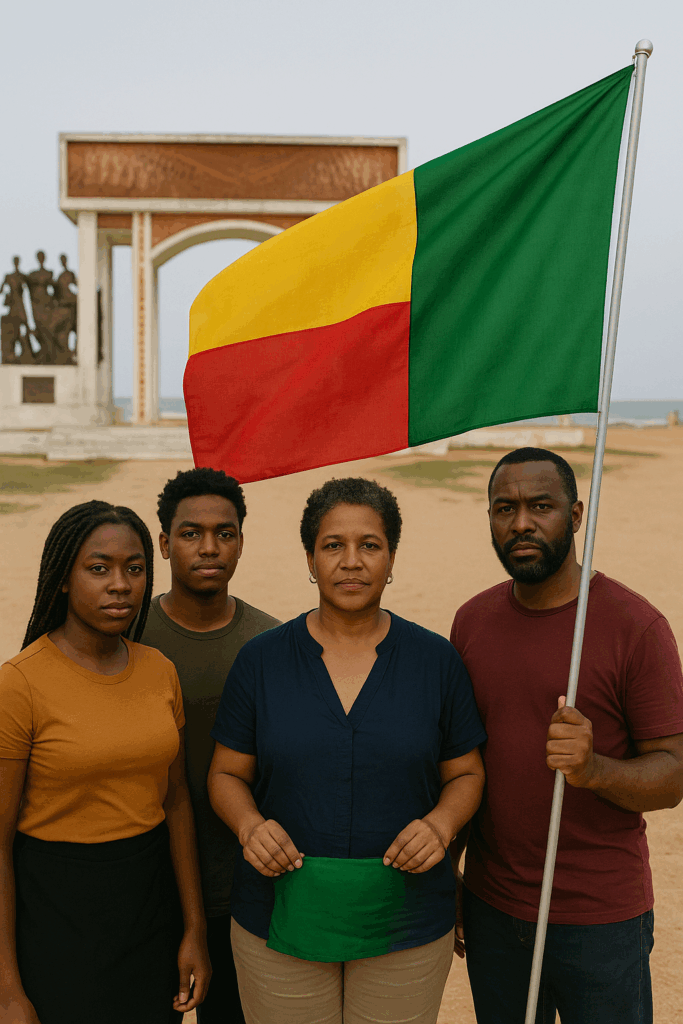
Benin is also promoting “memorial tourism”—heritage visits to sites such as the Door of No Return and the Tree of Forgetfulness in Ouidah—to honor those lost to slavery and educate future generations.
Conclusion
Benin’s law granting citizenship to descendants of the trans‑Atlantic slave trade represents a significant step in African nations recognizing historical injustices—and welcoming back those uprooted centuries ago. It blends legal reform, symbolic healing, and cultural reconnection, offering a path for diaspora members from Haiti, Brazil, the Caribbean, and African American communities to become part of the African nation many of their ancestors never left.

It is a great initiative which will have many advantages and benefits. I hope many other African countries can emulate Benin.
Agreed – more and more African countries continue to acknowledge the historical diaspora and seek pathways to aid in their return.
I would loke to apply for citizenship.
Please do apply – we have included instructions in our post. Please come back and share your success for other members to be aware of the process!
What DNA services are accepted by the Benin government for this process?
I think they accept african ancestry, ancestry. com, but not 23&Me
Hi, I went to the site recently. At first it seems like all you need is proof of Beninese descent. Which is stated a DNA test can be proof. The site asks for a relatives/ancestor’s name though. Which has asterisk next to each entry meaning a required entry. So looks like if you can’t name an ancestor who descends from Benin, you won’t be able to apply. *sigh*
My daughter applied and was denied , she forwarded a copy of my birth certificate and passport.I am concerned that this may be a scam.I don’t want to convey the Willie Lynch mentality, but I am concerned, what more than her blackness does she need to return to Africa.
Hi, did she translate the documents to French?
Exactly! They make it seem like its so easy to apply for and its not. Any descendants of slaves should be able easily apply for citizenship in African countries
I’m interested. Any more information about the DNA test? Any laboratory or company works or it has to be a Beninese one? I did one in 24Genetics and got 26% African. Most of it from West Africa, around Benin. Is it enough proof of ancestry? Thanks
You also have to be willing to move there for 3 years; to help acclimate you to the life and culture.
I want to be respectful here, but reading is fundamental. It is NOT required that anyone relocate to Benin for 3 years to acclimate….you will receive a Certificate of Eligibility if they approve your application. That certificate is valid for 3 years, meaning you must enter the country within 3 years to finalize the process – at which time you’ll receive your citizenship certificate. This allows you to apply for the passport. The finalization process is basically just paperwork at the office of the authorities…. and that’s it.
I applied back in January.. I hope and pray I gain citizenship! I would be a game changer for me and my offsprings…
How do I start my application, I am from North Carolina east of Raleigh